
Reimagining by-products, food waste and inclusive eating: 2026 New Zealand Food Award judges recognise themes of innovation
The food and beverage industry is an ever-changing space.
There’s the introduction of new ingredients, eureka moments in the production process and exciting perspectives that enter the scene to realise novel flavours and forms.
Each year, the New Zealand Food Awards provide a snapshot of the ideas, products and innovations emerging from leaders in Aotearoa New Zealand's food and beverage sector.
Common themes and emerging approaches become apparent throughout the judging process, with chosen finalists representing the very best of these shared curiosities.
Common themes of innovation
As General Manager of research and development hub FoodPilot at Te Kunenga ki Pūrehuroa Massey University, Head Judge Nikki Middleditch works closely with businesses involved in food innovation and product development. The New Zealand Food Awards provide another opportunity for Middleditch to see how producers and developers translate ideas into products for the market.
Across the 2026 entries, innovation was often less about novelty for novelty's sake and more about rethinking existing products, ingredients, production processes and supply chains.
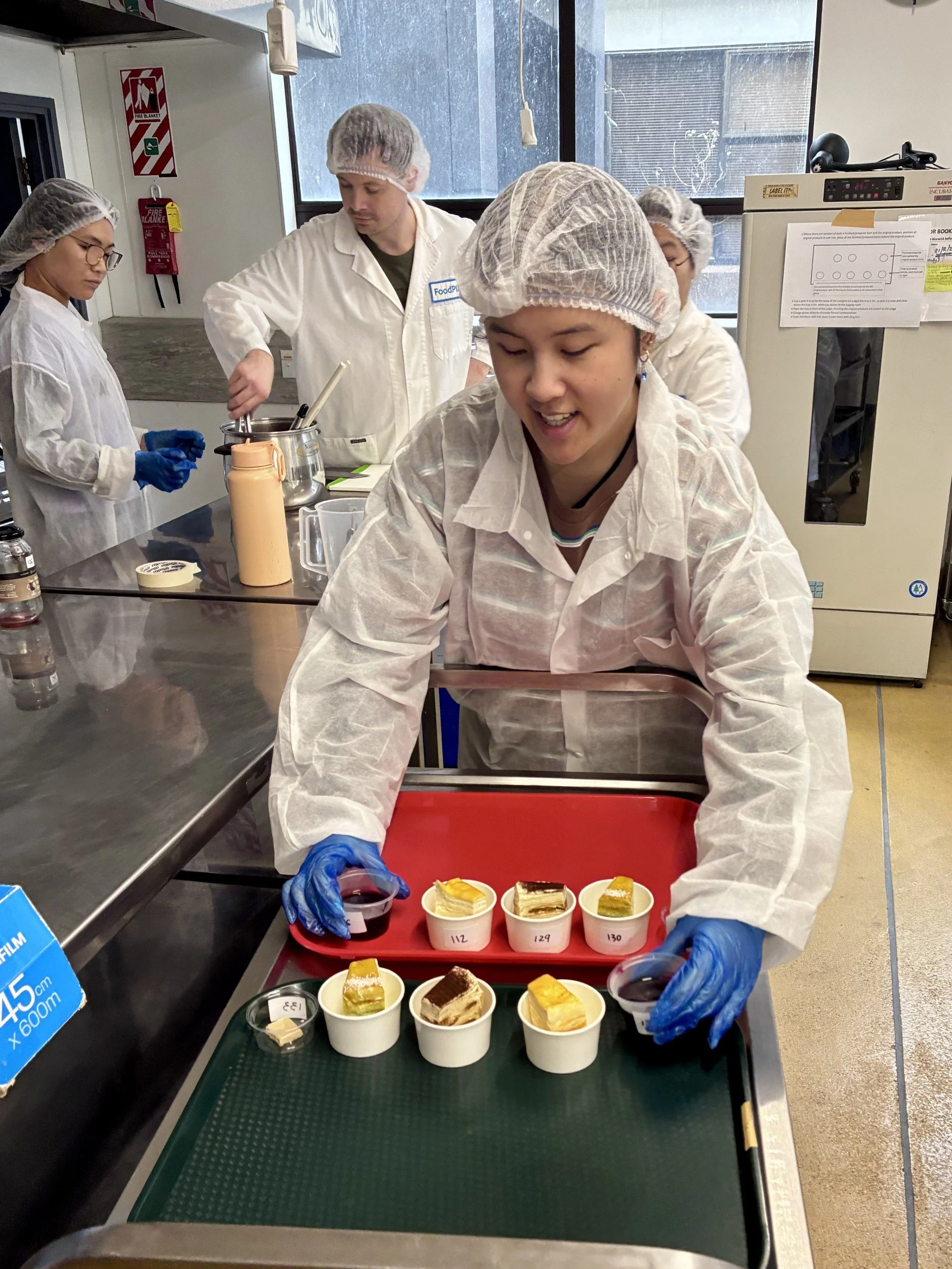
“One of the strongest themes was that innovation wasn’t necessarily about creating something completely new. We saw businesses rethinking familiar products through new formats, ingredients, flavour combinations and consumption occasions.”
This included the inventive use of primary produce once considered by-product. Middleditch points to Ikura Caviar by Mt Cook Alpine Salmon, sourced from the Southern Alps. It is made through an intentionally ‘roe-first’ production model, meaning roe isn’t treated as a by-product but as an ingredient with its own merits.
Of course, there was an interest in delivering novel ideas too. Growing food categories saw inventive new takes, Middleditch says.
“Fermentation and plant-based ingredients were used in clever ways to recreate complex flavours and familiar eating experiences.”
There’s UmamiBee founder Analiza Laurel-Badilles, who utilises fermented mushrooms to produce strong umami flavours for a plant-based condiment with cross-cultural reference. Judges praised the flavour profile and versatility of the sauce.
Creating a unique serving for those with plant-based preferences, plan*t is championing the possibilities of New Zealand-grown hemp. The brand has engineered a fibrous, plant-based ‘chick*n’ with the ingredient. It is ready-to-eat and can also be shredded, pan-fried or mixed with marinades and sauces – creating a versatile plant-based product designed to deliver a familiar texture and taste.
“We also saw thoughtful approaches to sustainability, where producers considered impacts to seasonal stocks and found ways to create value from ingredients that might otherwise contribute to food waste,” Middleditch observes.
The Tropical Kimchi, by Clevedon-based small-batch brand The Wild Fermentary, showcases a twist on their recipe with the addition of pineapple. The fermenting process solves for contribution to food waste streams, with the overripe pineapple bringing acidity and sweetness to a cabbage, carrot and turmeric-filled kimchi.
For the entries and producers that would become finalists, a high level of execution was key.
“Novelty alone wasn’t enough. A clever concept needed to solve a genuine problem or create meaningful value and ultimately translate into a product that worked for its intended consumer,” Middleditch says.
Recognising innovation with integrity
Ongoing developments within the sector encourage careful consideration of what it means to recognise quality work.
For the 2026 Awards, Middleditch led a refinement of the judging framework, building on its existing foundations to ensure it continues to reflect a fast-moving industry.

“We wanted to give entrants confidence that, regardless of category, their products were being assessed through a clear, fair and consistent framework, while still allowing judges to consider what excellence looks like for very different types of products.”
Judging evaluated each entry on their alignment with three pillars: innovation, excellence and sustainability.
“Innovation looks at what is new or different and the value that creates; excellence considers how well the product has been executed, including its technical and sensory performance, and whether it delivers on the needs of its target consumer; and sustainability considers the environmental impacts associated with both the product and its packaging, and the steps taken to minimise them.”
This process, across all categories, involved a panel of over 30 total judges. They were assembled from across academia, industry, retail and hospitality.
The framework combined universal criteria across all entries with category-specific questions where a different lens was required. Judges considered both the written submission and the product itself, allowing them to assess the evidence behind an entry and consider how successfully a concept translated into a finished product.
Finalists also underwent an independent compliance review, with support from New Zealand Food Safety, to provide greater confidence that products recognised by the Awards meet relevant regulatory requirements.
“We also wanted the framework to recognise that innovation is about more than simply having a novel idea. It’s about how successfully that idea has been translated into a product – technically, sensorially and in a way that is relevant to the consumer and market.”
What it means for the future of food
For Ms Middleditch, engaging with the diverse, innovative 2026 entries was an uplifting occasion.
“What gave me real confidence in the future of our food and beverage industry was the care being taken to develop products that are more inclusive of different consumers, without treating that as a reason to compromise on quality.”
Beyond meeting a particular dietary need or responding to an emerging consumer preference, several products demonstrated that inclusivity does not need to come at the expense of quality or the overall eating experience.
“That points to an exciting future where development helps broaden who can enjoy a product, while the expectation of excellence remains exactly the same.”
40 years on from the inception of an awards platform invested in innovation, the New Zealand Food Awards will continue to celebrate a more diverse, expansive and imaginative industry – where the pursuit of excellence remains firmly at the forefront.
The 2026 New Zealand Food Awards will celebrate finalists, winners and the wider food and beverage industry, with a black-tie gala dinner on 13 October at Auckland’s Shed 10 from 6.30pm. Tickets are on sale now.